Herts Reels

Welcome to Herts Reels, the home of film reviews curated to cast a unique angle on local events in our vibrant Hertfordshire community. Curated by James Poole, film correspondent with Mix 92.6 FM.

  • By James Poole in collaboration with Mix 92.6 FM’s ‘Mix at the Flicks’.


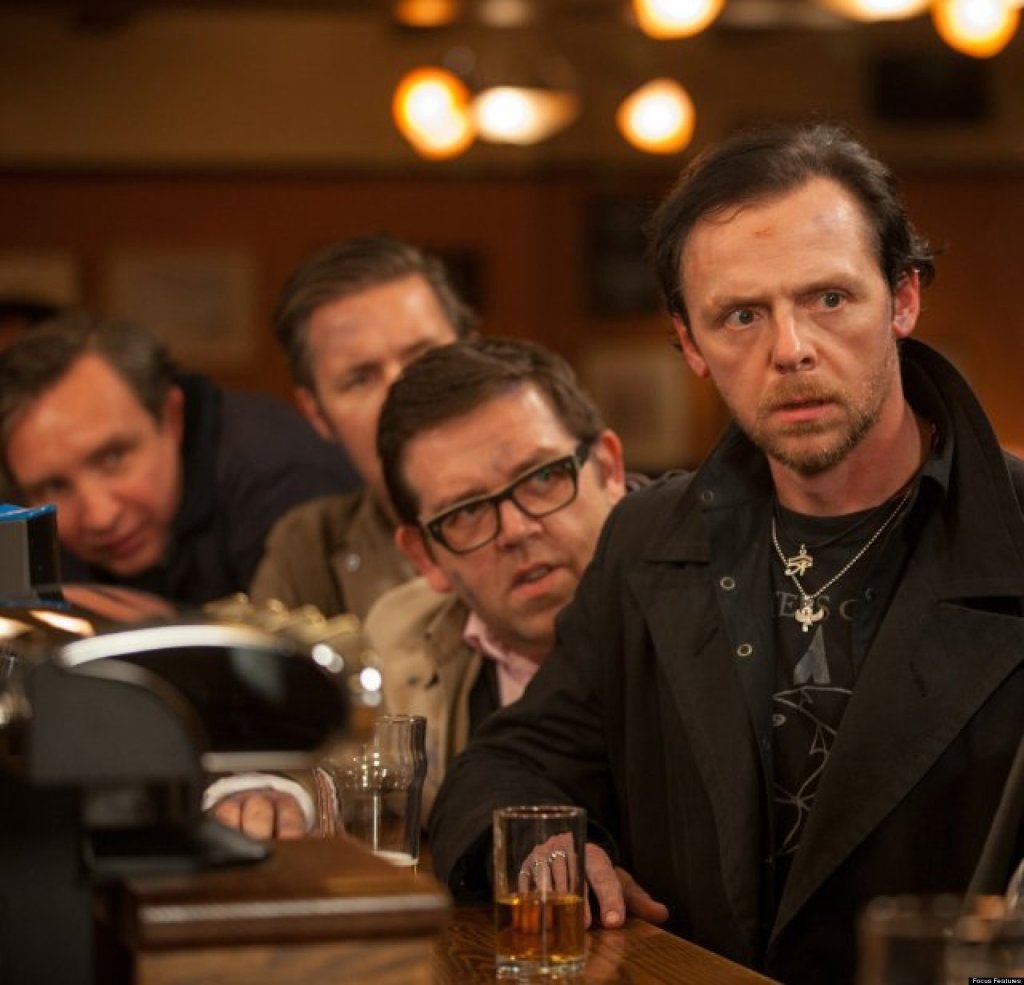
    The World’s End (2013), written and directed by the legendary Edgar Wright, is a science fiction action-comedy starring iconic British actors including Simon Pegg, Nick Frost, and Martin Freeman. The film follows a group of adult men, led by the man-child ringleader Gary King, as they attempt to recreate their childhood glory days on a 12-round pub crawl in their hometown of Newton Haven. But the night quickly descends into chaos when they discover their old town—and its pubs—aren’t quite what they remember.


    So why am I talking about pubs this week? Well, when I’m not watching and talking about films, I work at a beloved local pub in St Albans called The White Hart Tap and today also marks my one-year anniversary of working there. In that time, I’ve witnessed change—new faces, old faces gone—but one thing hasn’t changed: the profound sense of community. Whether you’re catching up with friends, meeting regulars, or enjoying guest ales, the pub always fosters a sense of togetherness.


    The same sense of togetherness I mentioned in The White Hart Tap is what Gary King attempts to drive so desperately amongst his friends, all of whom have moved on from their teenage years, found jobs and started families. To Gary, played in the best performance of his career by Simon Pegg, the pubs of Newton Haven become a perfect microcosm for his own self-doubt. All of them have been modernised, updated and lost their old identity. As his friend quips, this is part of a nationwide effort to rob pubs of any discernible charm. The pubs, like his friends, have grown and changed while he has stayed the same, never growing beyond his teenage years, trying to repeat this pub crawl because it represents the best night of his life, a moment when him and his friends were young, happy and free.


    This inner turmoil of Gary staying the same while the world changes around him is what makes the villain of this story so compelling. Upon returning to Newton Haven, Gary and his friends soon discover that the town has been taken over by an alien invasion called ‘The Network’. Their goal is to assimilate humanity into a controlled, uniform system by replacing humans with robots to eliminate individuality and disorder. In other words, eliminate their flaws to achieve perfection.

    And is it perfection? Possibly, since these robots are almost a mirror copy of the humans they impersonate. They have their memories, their physical identities, but they don’t have their flaws. Despite their almost faultless impersonation, they lose the ability to adapt, to overcome, to struggle through change to become a better version of themselves. Like Gary, they are frozen in time in a moment of perfection. Only by confronting these robots does Gary realise that living and aiming to recreate the best night of his life is a harmfully idyllic way to look at life.
    Now, onto the man, the myth, the legend himself – Edgar Wright.

    Blink and you’ll miss it. That’s the best way I can describe the Edgar Wright directs this film. It’s fast, frenetic, the dialogue is razor sharp and every word serves its purpose. This is a film that trusts you to sit down and not just watch but carefully observe everything from beginning to end. Almost every line has multiple meanings, different ways of being interpreted. This isn’t a film you can just have on in the background – it’s a film you’ll be talking about with your friends and families for days afterwards if you pay attention.

    So to conclude, besides anyone who loves beer, I think anyone who is struggling with the idea of change in life should watch this film. It asks what perfection really means—is it a flawless, idyllic existence, or the messy, flawed journey that shapes who we are? Gary King’s story—and the history of The White Hart Tap—suggests it’s the latter.
  • When fireworks tell a story: V for Vendetta – Review.

    By James Poole in collaboration with Mix 92.6 FM’s ‘Mix at the Flicks’.

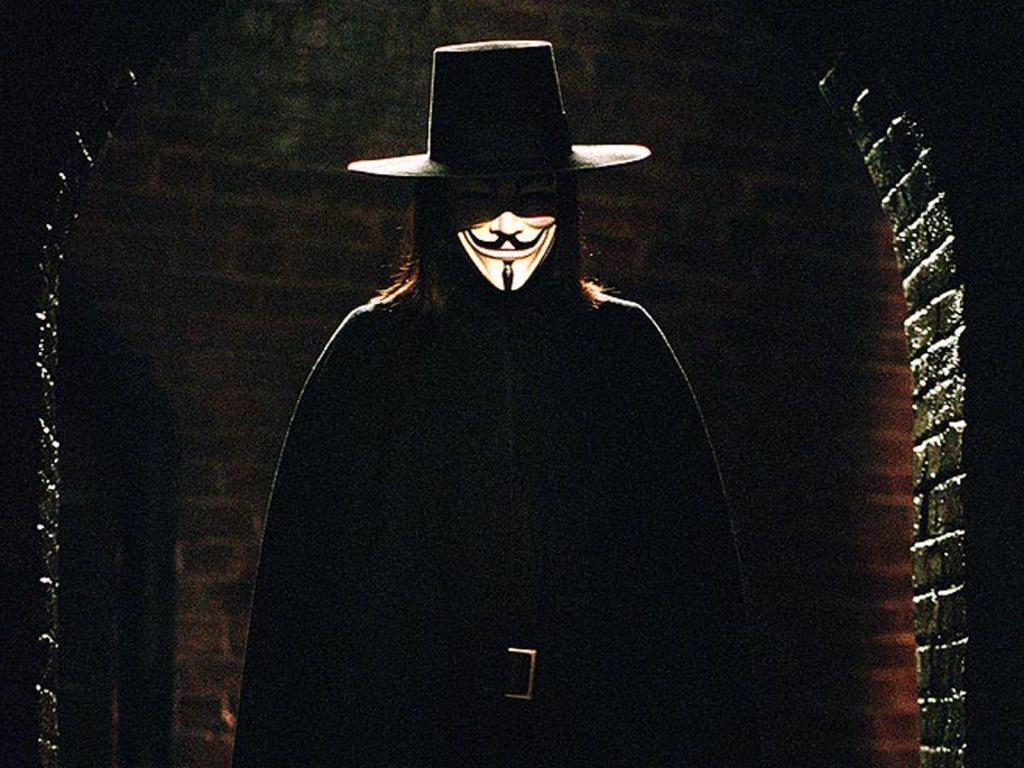
    V for Vendetta is a 2005 dystopian thriller film directed by James McTeigue in his directorial debut, from a screenplay by the minds behind the Matrix, the Wachowski sisters. Starring Hugo Weaving, Natalie Portman and John Hurt, the film centres around the eponymous V, a Guy Fawkes masked freedom fighter on a quest to incite revolution against the totalitarian Norsefire government, using fireworks as his signature weapon.

    It’s that time of year, isn’t it? When we as a nation gather at our local parks, or our friends and families’ gardens to enjoy the spectacle of Bonfire Night and promise to always ‘remember, remember, the 5th of November’. But what does remembering the 5th of November mean to us? This celebration, of course, commemorates the failure of the Gunpowder plot, where a group of English Catholics, including Guy Fawkes, attempted to blow up the Houses of Parliament, assassinating King James I and replacing him with a Catholic monarch. Over time, these political and religious associations have faded, and Bonfire Night has turned into a community event that symbolizes fun and togetherness. And is that what history would want? Perhaps the biggest punishment for people who will go to such extreme lengths to make their mark on history is irrelevance, after all.

    I think the answer depends on how closely you root for V, as this film uses him to reimagine the essence of Guy Fawkes’ rebellion in a modern, dystopian setting. And whatever he is in this film, whether you see him as a hero, a villain or an antihero (and the film is so well written that this is genuinely up for debate), the one thing that isn’t up for debate is his relevance. In this world, as he stands up against a far-right totalitarian government and executes those considered ‘undesirable’, V represents everyone who requests what should be their basic right to freedom. Unfortunately for Norsefire, that happens to be the millions of people their regime have oppressed. As V himself says ‘people should not fear their government. The government should fear their people’.

    And perhaps that is why V succeeded where Guy Fawkes failed – because of who he represented. Guy Fawkes fought as one man against a system, V fights as the embodiment of every person oppressed by it. So when the public start wearing V’s mask, he becomes more than a man – he becomes an idea, a movement, that can be shared, taught and fought for. It transcends one human life; in the eyes of many, it becomes worth living for. Where Fawkes’ rebellion dies with him, V’s lives on in the hearts of the people he inspires.

    To conclude, I’d recommend V for Vendetta, available on Blu-ray, DVD and Amazon Prime, to anyone attending fireworks night this weekend. When I finished watching this film, the question I asked myself was this. ‘What would fireworks night have come to represent in V’s world?’ Like I said earlier, I believe the original intention of commemorating Guy Fawkes failure has been somewhat forgotten – and for good reason too. I think there’s a beautiful irony in celebrating an event that once threatened to divide the nation by now bringing people together. And is togetherness what would have been celebrated for years afterwards on Bonfire Night in V’s world? I think so – as I mentioned earlier, the oppressed nation becomes united by V’s movement.

    So when we all gather at Verulamium Park this weekend, watch the sky become illuminated with fireworks and cherish the time spent with our loved ones, I think it’s worth asking the question ‘what has happened for us to be able to enjoy these moments?’  As V for Vendetta shows us, after all, such moments rarely come without hardship.

  • Heart, Humour and Hertfordshire Half: Brittany Runs a Marathon – Review.

    By James Poole in collaboration with Mix 92.6 FM’s ‘Mix at the Flicks’:

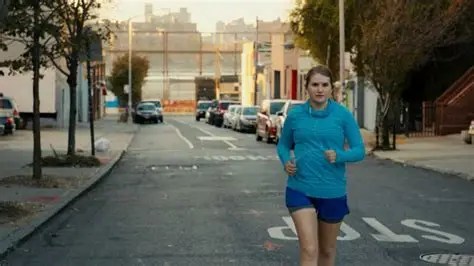
    Brittany runs a marathon is a 2019 comedy film, directed by Paul Downs Colaizzo in his directorial debut. Starring Jillian Bell, Michaela Watkins and Utkarsh Ambudkar, it tells the story of an overweight lady struggling with substance abuse, who sets out to lose weight, which opens her eyes to the world of marathon running.

    This review is being written in alignment with the upcoming Hertfordshire Half Marathon, on November 2nd. Starting in the grounds of the iconic Knebworth House, the road closed event will snake through Hertfordshire’s beautiful country roads in an out and back route, finishing back at Knebworth House.

    With an event of this magnitude, that will attract such a wide demographic of people with so many different stories, the question I kept asking myself ahead of this week’s ‘Mix at the Flicks’ was ‘why do we run?’. For some people, running provides a means of being alone to process life events, as was the case in Forrest Gump, when he spent 3 years running across America to process everything that had happened in his life. For others, they run for glory, like Eric Liddell in Chariots of Fire. Sometimes, the rush of running even becomes a means of fulfilling other people’s goals, as was the case with Colin Smith in The Loneliness of the Long Distance Runner.

    What I love about Brittany Runs a Marathon is its simplicity. Our protagonist, Brittany is presented as someone who is overwhelmed by so many problems in life that it’s hard to know where to start. She enters running with no assumption that it will magically resolve all of her problems; she runs to lose weight and feel better about herself. But the feeling she gets after finishing a run, which I think any regular runner can relate to, is so addictive and so powerfully healthy that she simply can’t give it up. With the clarity of mind that running helps her achieve, her problems suddenly start falling into perspective and she feels that little bit more prepared to overcome them.

    Something else I genuinely appreciated about this film is the sense of community in runners that this film presented. There’s no one sneering down on Brittany in her first few runs, no one judging her for being slow or being overweight. In another film, Brittany would have been cat called by a passing car or sneered at – in this film, she’s found a community who’ve all done their first run at some point, who’ve all questioned how much further then they can go but who’ve all managed to surprise themselves at some point. Like the runners in this film keep saying ‘the winning doesn’t matter – all we have to do is finish.’ And for any first-time half marathon runners doing the Hertfordshire Half on Sunday, I can assure you as a half marathon runner that this reflection of our community couldn’t be more accurate. All you need to do to gain the respect of our community is simply be there and be willing to give it a go. And the feeling you’ll get after finishing the run cannot be beaten.

    Returning to the topic of community, I think the strong sense of community is very powerfully dichotomised by Brittany’s supposed friend, Gretchen. Any time Brittany completes a run, she either subtly minimalizes her achievement or tries to distract her with the damaging habits, such as binge eating, drinking and partying that kept Brittany feeling miserable for so long. You get the distinct feeling that their friendship exists on the basis that Gretchen places Brittany by her side to propel her own self-image. And the film does Brittany the courtesy of not making these habits easy to overcome or even suggesting that she should abandon them altogether. Again, Brittany finds the right moderation through running, which in itself allows her to form a disciplined training programme. By going on a run, she gets the buzz. That buzz takes her a bit further and she runs her first 5K. So why not go a bit further and run a marathon? Wait a minute, gym memberships are expensive, so I need to get a better paying job to afford it. Hang on a minute, I’ve already lost 30 pounds? This sequence of events that Brittany goes through all starts with one run, and yet it feels totally realistic and achievable for its audience.

    In essence, this film captures what I would consider a very untold story that happens everyday around the world. The films I mentioned before; Forrest Gump, The Loneliness of the Long Distance Runner and Chariots of Fire. These are all outstanding films that have earned their place in film iconography, but they all capture the story of outstanding athletes who the everyday person can’t necessarily relate to. Brittany Runs a Marathon tells a story of a woman who decided to go on a run one day, which starts a sequence of events that changes her life for the better. For anyone attending the Hertfordshire Half Marathon this weekend whose journey started with one run like Brittany, I want to extend my congratulations and wish you the best of luck for the weekend; whatever’s happened for you to get to this stage, you’ve earned it.

  • Hello everyone! My name is James Poole and since watching Pixar’s ‘Cars’ in cinema when I was four, I have loved all things films. I love watching them, I love debating them, I love realising that I missed a small detail that transforms my entire perception of the film when I look back on it again. I believe that films, like nothing else, have the power to transport us to a whole new world where anything is possible.

    The last few years of my life have been dedicated to understanding the making of films and how we arrive at the finished product that so many people love. I first studied my BA in English and Creative Writing at The University of Birmingham, later moving onto Manchester to complete my MA in Screenwriting. Besides meeting so many incredibly talented people along the way who changed the way I approached writing and critiquing, one of my main takeaways was how film acts as a lens to help people experience events in so many different ways, whether nationwide or localised.

    That approach of examining events through the lens of film is precisely what Herts Reels is about. My aim is not just to critique films, but to judge them as windows into localised culture, history and community events. And where better to base this endeavour than Hertfordshire, in my opinion a cornerstone of UK cinema?

    I couldn’t be more excited to start this journey with Herts Reels, and I can’t wait to share and debate my thoughts with all of you. So sit back relax…it’s about to begin.